
REVIEW · MALLORCA COASTEERING & CLIFF ADVENTURES
Mallorca: coasteering South
Sea cliffs, then five jumps.
This coasteering route on Mallorca’s south coast is built as a high-energy circuit where you swap between saltwater action and protected, step-by-step instruction. It’s set near Calvià and Peguera, so you get dramatic coastline views fast, without spending hours on travel time.
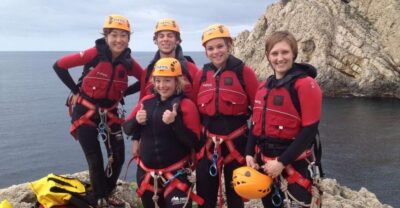
What I like most is the way this single outing bundles multiple formats: cliff jumping, a short psicobloc (DWS-style) crossing, an abseil, and a zipline. I also like that the session is run with high-quality safety gear and a small group size (up to 10), which makes it easier for the guide to manage everyone’s pacing.
One thing to think about up front: this is not for weak swimmers. You should be comfortable with open-water swimming for longer stretches, and conditions can mean you are out there without constant hands-on attention while the team resets gear or checks access points.
Key things to know before you go
- Five jump entries into the sea, from 2 to 8 meters, so you can build confidence step by step
- Psicobloc / DWS-style crossing close to sea level, climbed without a rope
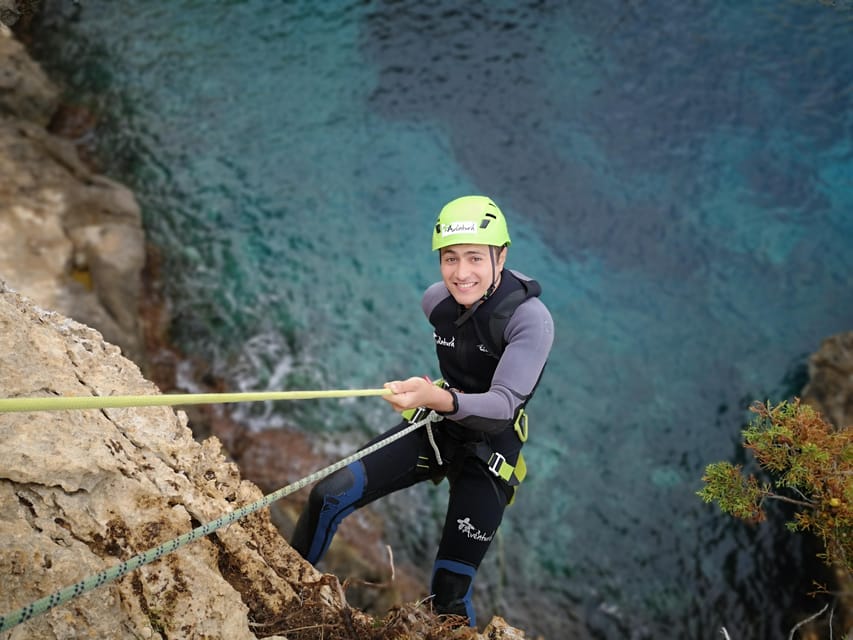
- Abseiling about 10 meters plus a zipline ending toward the water
- Small group (up to 10) with an instructor in English and Spanish
- Near Peguera and Calvià, so the views and access feel close and practical
- You can opt out of abseiling, zipline, or high jumps if you want a lighter version
Entering the Peguera Cliffs, without the “big tour” feel
Mallorca’s south coast has that classic Balearic mix of sun, limestone, and sea access that looks easy from the beach and feels very real once you’re on the rock. Coasteering south is designed to use that reality. You start at Hotel Coronado Thalasso & Spa, then you head toward the coastal start point near Peguera.
The vibe here is athletic and casual at the same time. You are not just sightseeing from above. You’re moving along the coast, learning how to judge holds, how to enter the water safely, and how to keep your head when your body gets cold fast. And the guide’s job matters, because the sea route and the jump spots depend on safety conditions.
You can also read our reviews of more tours and experiences in Mallorca.

The 3-hour pacing: briefing, short moves, then a nonstop circuit
This is a compact, about-three-hour experience, which I actually like for vacation days. You get a safety briefing right around the Peguera area, then you move from meeting area to the action. The plan is structured enough that you’re not left wondering what comes next, but it still feels like a real coastal circuit rather than one single stunt.
Expect the pacing to follow a familiar rhythm:
- brief checks and instruction
- walking and climbing segments to reach the next feature
- then activity, reset, activity again
One practical note: even with a tight schedule, the guide may need time to prepare or re-set equipment between moments. So when it’s your turn in the water, stay focused and treat it like a real swim, not like a short splash.
Those five sea entries: building comfort from 2m to 8m
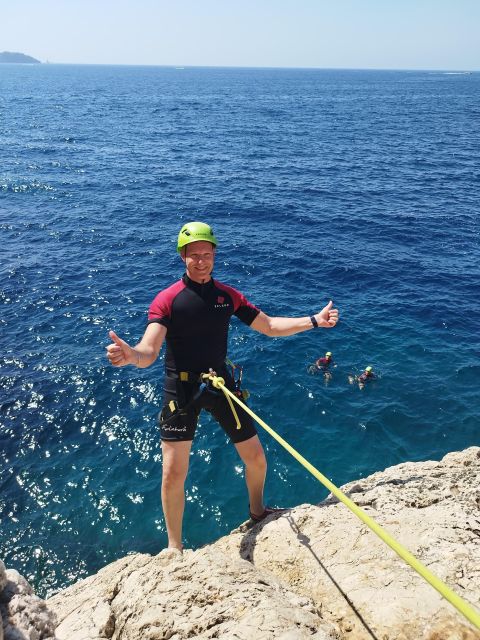
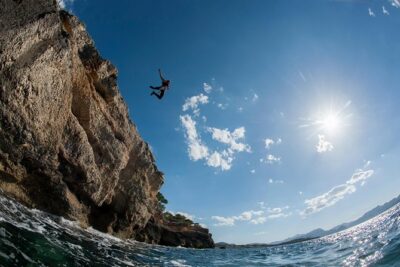
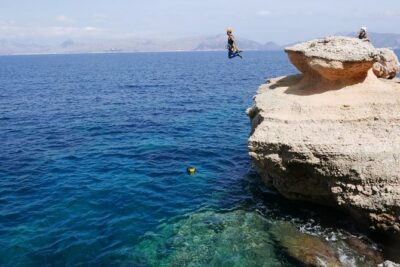
A big selling point is that you get five jumps into the water, and each one changes the height, roughly from 2 to 8 meters. That spread is important. Beginners often fear the unknown more than the height itself. By stepping through multiple entries, you get repeated practice judging distance, timing, and how the water meets you.
Here’s how I’d think about it as you plan your comfort level:
- The lowest jumps are your warm-up for technique and breathing.
- Middle-height jumps help you calibrate your body for entry position.
- The higher jump is the moment where you either trust the instruction or you don’t.
If you’re the type who freezes at the edge, don’t force it. The tour is built to let you build. Still, you should remember: the sea is the landing, not a pool. Your body will react fast, especially if the water is cooler than you expected.
The coastal climbing part: what “coasteering” means here
Coasteering isn’t just jumping. It’s also moving along the coast and managing your footing on uneven rock close to the sea. Even when your favorite part is clearly the drops, you still need to be ready for the in-between effort: climbing short sections, stepping across rock with wet textures, and staying aware of where the water level might shift.
One participant noted the focus felt more weighted toward jumps and abseiling than long stretches of climbing along the coast. That tracks with what this route is selling. It’s an action circuit more than a long scenic trek. So if you want a hike-first day with occasional stunts, you might want to compare options. If you want movement plus repeated sea entries, this is your format.
Psicobloc and DWS-style crossing: no rope, near sea level
This is the most technical-sounding part, and it’s also one of the coolest in concept. You’ll do a psicobloc traverse, which means climbing without a rope at a maximum of about 2 meters from sea level. That detail matters because you are not protected by a rope system. You’re protected by the route being set at a low height, with spotters and safety planning.
Think of it like “controlled exposure.” You’re learning how it feels to use rock holds while your next move is always tied to water below. The key is calm and trust in the instruction. If you get tense, your body uses the wrong muscles and you start reaching instead of placing.
Also, the guide can adjust the route if access to a cave becomes unsafe due to sea conditions. That’s not a small footnote. It means you are participating in a living environment, and you should be mentally flexible.




Abseiling about 10 meters, and the zipline finish
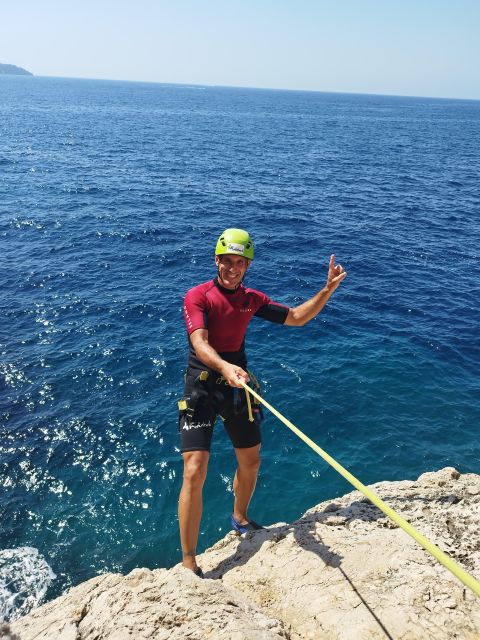
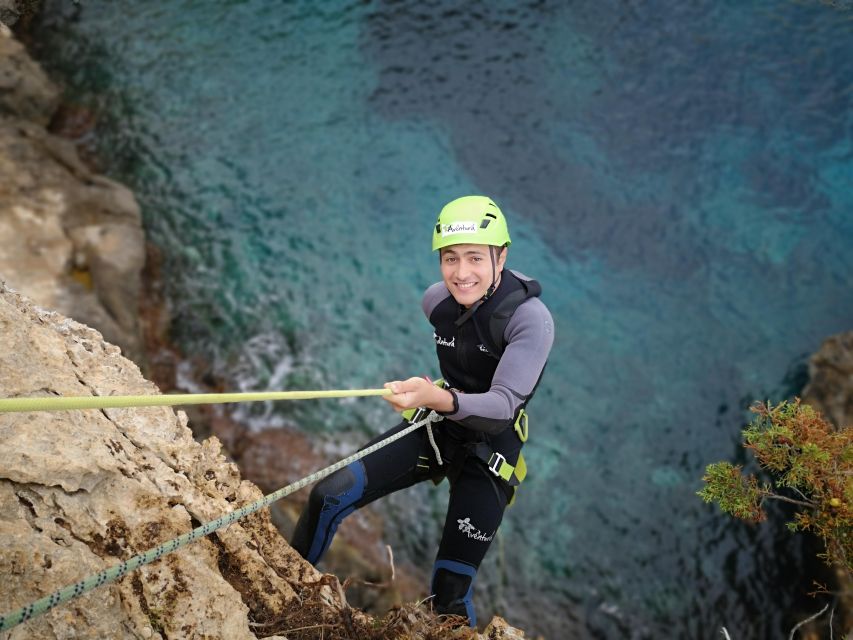
After the water entries and the short climbing crossing, you switch to vertical confidence skills. You abseil down about 10 meters. This is where technique beats bravado. You don’t want to fight the rope system or yank yourself into place. You want steady, controlled movement, and you want to follow the guide’s cues.
Then comes one of the most fun “wow” moments: a zipline to the sea. It’s the kind of finish that makes the whole morning feel like a story with a clear climax. It also adds variety. By the time you’re sliding toward the water, you’ve already done jumps and a rope-free crossing, so your brain is warmed up for new challenges.
Safety gear quality: why it matters more than you think
This is adventure sport, so safety is not an accessory. The tour explicitly uses high-quality safety gear, and the small group size helps the guide keep eyes on everyone.
You should still take safety seriously at your level. That means:
- listen carefully during the briefing
- ask questions about what you should do in the water
- move slowly and deliberately during the climbing segments
- avoid rushing your jump technique
One more reality check from the experience style: the sea and the timing can create moments where the guide isn’t right at your elbow. That doesn’t mean chaos. It means reset and preparation happen. So you should already be comfortable swimming and staying calm if you’re between steps.
Guide team and communication: English and Spanish support
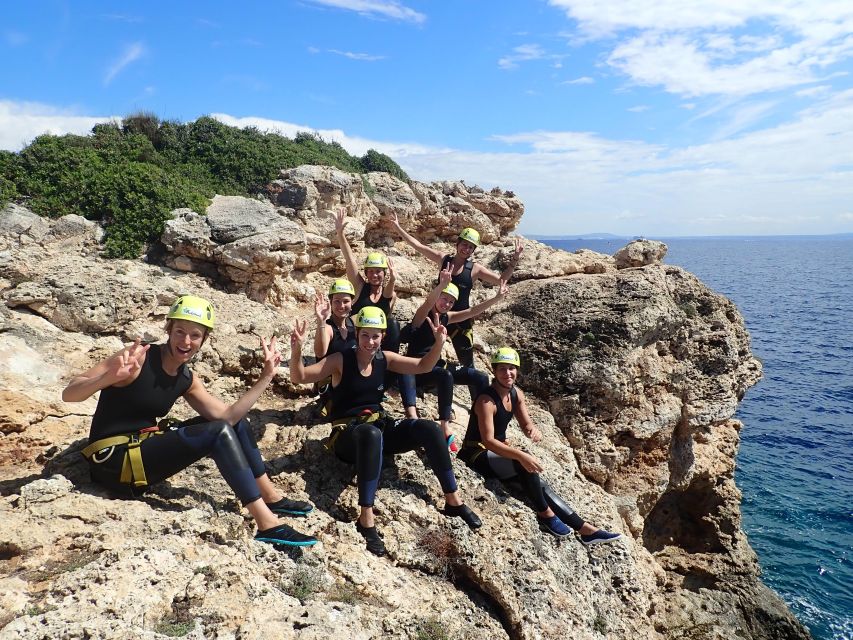
The instructor speaks English and Spanish, and they run the flow with a focus on keeping you safe. One participant highlighted a guide named Maria as very kind, and noted she tried to explain things in German even when her German ability was limited. That’s a great sign of the overall attitude: patient, human, and focused on understanding, not just saying words.
If you don’t speak Spanish or English well, that could still be fine because body language and equipment checks help. Still, come prepared to communicate clearly when you have a question.
Footwear and what to pack for Mallorca sea rock
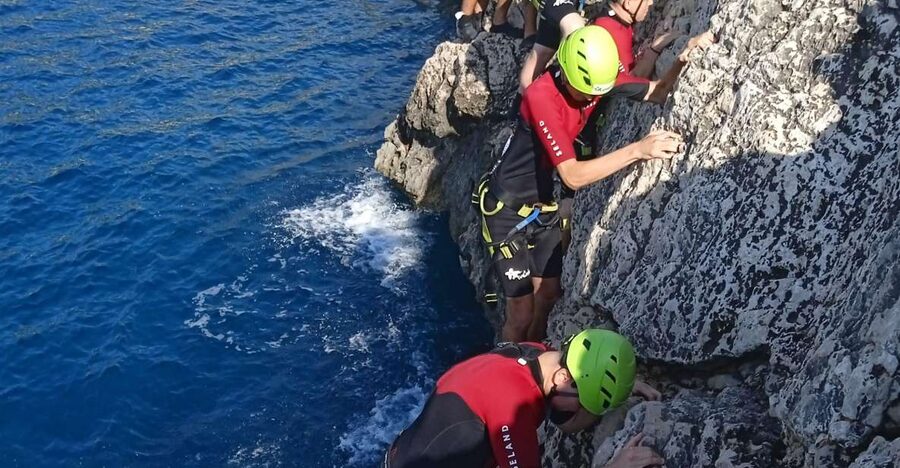
If you do just one prep thing, do this: bring booties with a rubber sole if you can. The tour suggests that’s ideal, and they can provide them if you don’t have your own.
For packing, keep it simple:
- swimwear
- towel
- sunscreen
- water
Then think about the “after” problem. You’ll likely be wet and salty, so having your towel ready matters. Also, sunscreen in this type of day is not optional. Sun on the coast hits hard, and you’ll be out of the water between features when you least expect it.
Who this is perfect for, and who should skip it
This coasteering south route is best for people who want a sea-focused adventure and are excited by repeated actions in a short time. It’s also a good fit if you want a route that mixes skills: jumps, rope descent, and a rope-free climbing segment.
It’s not suitable for:
- pregnant women
- non-swimmers
That non-swimmer warning is serious, because you’ll be doing open-water swimming and you need confidence with longer stretches. If you only swim comfortably in calm pools, this is probably not the right day. If you can swim with ease and you feel okay in natural conditions, you’ll be in a better place to enjoy it.
The value question: is $77 worth it?
At around $77 per person for about three hours, the value makes sense when you look at what’s included. You’re paying for multiple activities in one location: five jump entries, psicobloc/DWS-style crossing, an abseil, and a zipline. You also get the benefit of safety gear included in the fee.
If you were to price those elements separately, you’d likely spend more and spend more time traveling between activities. This tour keeps everything tightly connected near Peguera, so you get an efficient adventure day.
The “value” catch is your personal preference. If you’re mainly here for scenic walking, you might feel the day is more stunts and less roaming. If you’re here for the sea and the repeated entries, you’ll probably feel you got your money’s worth.
Small-group dynamics: up to 10 people, more attention
Up to 10 participants is small enough that your guide can explain and correct without treating it like a conveyor belt. That matters when you’re learning jump entry technique, managing footing, and trying psicobloc holds without a rope system.
Small group also changes the mood. You get to move with less waiting around, and you’re more likely to feel comfortable asking questions before you step into the water.
Should you book Coasteering South near Calvià and Peguera?
Book it if you:
- are a strong swimmer and feel comfortable in open water
- want a packed, action-heavy day with five sea jumps
- like learning new skills in one session, not just watching from the shore
- want a small-group experience led by an instructor in English and Spanish
Skip it or choose a different option if you:
- are not comfortable swimming with confidence
- prefer a hike-first, viewpoint-based outing
- don’t want any vertical challenges, because the day includes an abseil and a zipline
One last tip for a smooth decision: the tour notes that you can skip abseiling, zip-line, or jumping from high places if you don’t want those parts. That flexibility can turn a “maybe” into a “yes,” as long as you’re comfortable with the water time.
If your ideal Mallorca day is sun, sea access, and a few moments that make you laugh at the sheer bravery of it, this one is worth putting on your list.
FAQ
Where does coasteering south start?
You start at Hotel Coronado Thalasso & Spa area, and you meet at the end of parking St. Cala Fornells next to the hotel.
How long is the experience?
The duration is about 3 hours.
Is this tour a small group?
Yes. The group is limited to 10 participants.
Do I need previous experience?
No previous experience is required.
What activities are included?
You’ll do five jumps into the sea, a psicobloc or DWS-style traverse, an abseil of about 10 meters, and a zipline to the sea.
Do I have to bring my own booties?
They recommend bringing your own booties with a rubber sole. If you cannot, they will provide them.
Is it suitable for non-swimmers or pregnant women?
No. It is not suitable for non-swimmers or pregnant women.
More Tour Reviews in Mallorca
Not for you? Here's more nearby things to do in Mallorca we have reviewed






Mallorca Coasteering & Cliff Adventures, compared.
 ★ 4.8Quad Bike Tour, Snorkeling, and Cliff JumpingFrom $622,294 reviews
 ★ 5.0Kayaking, Sea Cave, Cliff Jumping & Snorkel TourFrom $83769 reviews
 ★ 4.8Mallorca Half-Day Coasteering ExperienceFrom $79378 reviews
 ★ 5.0Kayak Tour with Caves, Snorkeling and Picnic (+ Cliff Jump)From $83118 reviews
 ★ 5.0Small-Group Cliff Jumping Experience in MallorcaFrom $9084 reviews
 ★ 4.94-Hour Cliff Jumping AdventureFrom $8856 reviews
 ★ 5.0Coasteering in South Mallorca with TransfersFrom $9055 reviews
 ★ 5.0Coasteering MallorcaFrom $7440 reviews
Browse the lists this tour appears in